AI is one of the most consequential technologies of this era.
Most of us already depend on AI daily without knowing it, embedded in most of the electronics and infrastructure that keep modern life running. The recent rise of chatbots and agentic AI has made visible what was already true: AI's role in our economy, our institutions, and our lives is not shrinking. It is accelerating.
The current AI landscape carries real and growing risks:
These are not hypothetical concerns. They are documented, active, and important to name, without minimizing them and without pretending Terradigm exists outside of them.
We also believe something else is true at the same time which is that opting out is not a neutral choice.
AI is already shaping the systems that will shape our future. Stepping back from it does not slow its growth. It simply cedes that ground to those with no stake in building systems aligned with life and planetary health.
We would rather be in the room, shaping how this technology gets used, than leave that work entirely to others.
That is the wager behind Terradigm.
We use Terradigm’s proprietary AI system to analyze, synthesize, and translate nature’s strategies, making rigorous biological insight available to people redesigning our systems far faster and more broadly than traditional research methods allow.
Terradigm's AI has been rigorously trained and tested to produce precise, deeply contextualized translations, limiting the human bias and the fabricated claims or shallow pattern-matching that undermine less carefully built AI systems or generic chatbots.
This orientation isn't fixed. We expect it to develop as the technology, and its impacts, continue to evolve.
AI is not Terradigm's core technology. Nature is.
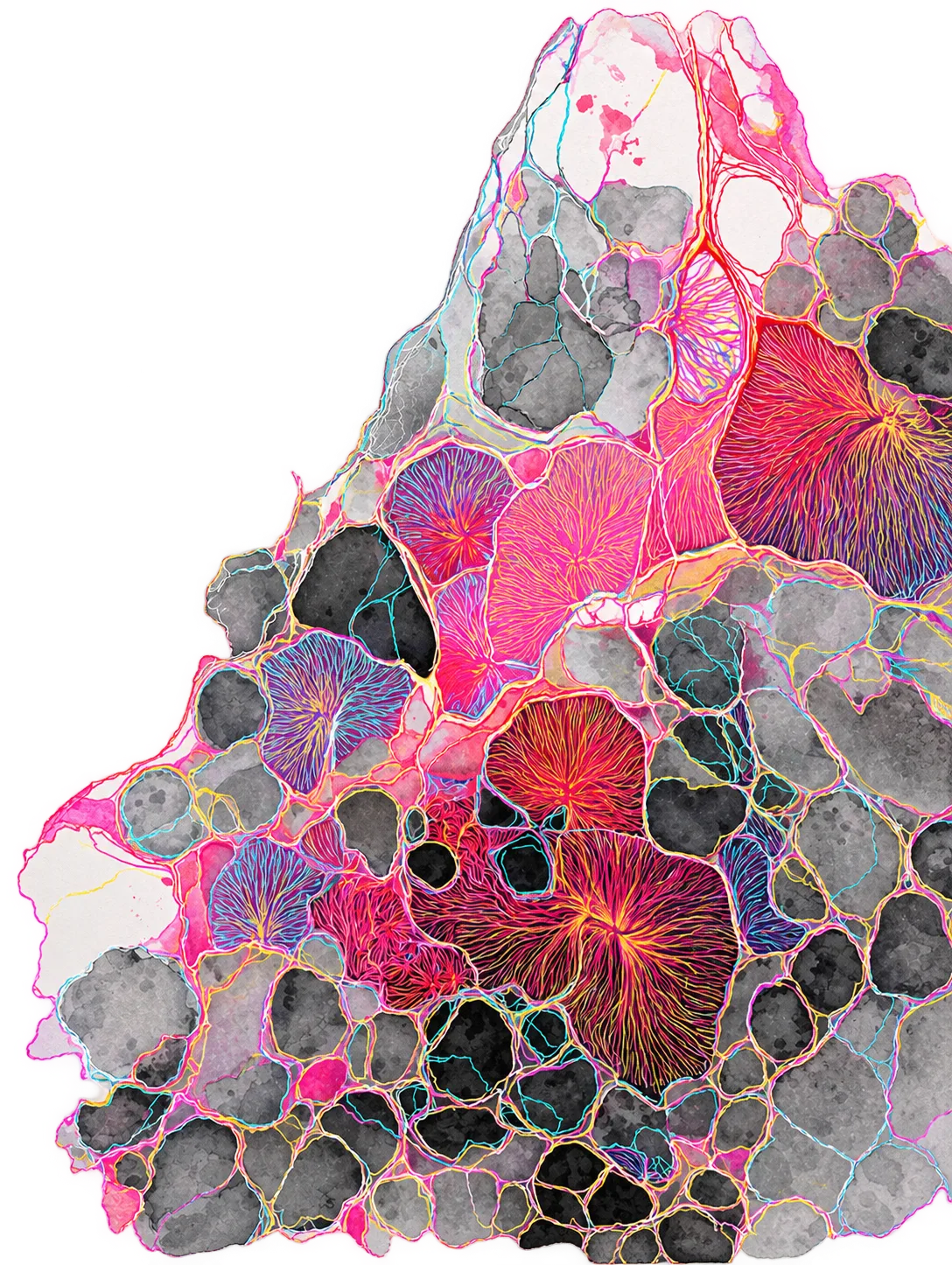
The insight, the 3.8 billion years of tested strategy, comes from the living world, not from the model. We built Terradigm to decode that intelligence at scale. We did not build it to make a case for AI.
Terradigm directs 3% of all profits to communities and organizations advancing AI accountability, and to communities most impacted by AI's harms that are organizing for a voice in how these systems are built and governed.
We will also continue to examine our own use of AI as its trajectory becomes clearer, to make sure the tradeoff we have made continues to hold up.